

A New Era In Christian Publishing: How The Church Of Pentecost Is Redefining Book Distribution
 Joseph Attoh
The publishing landscape is undergoing a remarkable transformation. For generations, the launch of a newly published book was considered an essential milestone in an author’s journey. A formal book launch often involved elaborate planning, venue decoration, media publicity, distinguished guests, and the ceremonial unveiling of the publication. It was not merely a celebration but also a primary strategy for introducing a book to the public.
However, the digital revolution is reshaping long-standing traditions.
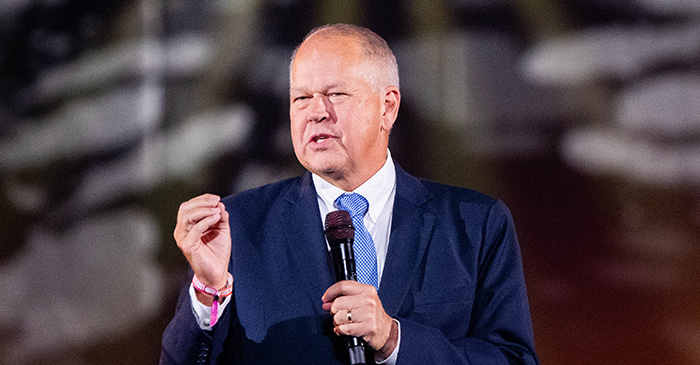
One significant example emerged during Pentecost 2026 Germany, where the Chairman of The Church of Pentecost, Apostle Eric Nyamekye, through the Missions Director, Apostle Emmanuel Bekoe Agyemang, announced that five of his books have been made available for sale on Amazon, one of the world’s largest digital bookstores, without the customary book launch ceremony.
This development reflects more than a change in publishing practice; it represents a strategic shift in how Christian literature is distributed in the twenty-first century.
For many years, book launching was often a demanding undertaking. Authors invested heavily in printing, publicity, venue arrangements, invitations, and hospitality. Friends, church leaders, dignitaries, and benefactors gathered to celebrate the publication, with many purchasing copies during the event as a gesture of support. After the ceremony, the remaining books were transported to bookstores and warehouses, where they awaited buyers.
Unfortunately, countless excellent books remained on shelves for years, receiving little public attention and, in some cases, becoming outdated before reaching their intended audience.
The digital age has introduced a more efficient model.
Instead of relying on a single launch event, authors can now publish their works directly on global platforms such as Amazon, where readers from virtually every part of the world can discover, purchase, and receive books almost instantly. The focus has shifted from celebrating the release of a book for one day to ensuring its accessibility for years to come.
This approach significantly reduces the financial burden associated with traditional launch events while dramatically expanding the potential readership. A book placed on Amazon is no longer limited by geography. Whether a reader lives in Ghana, Germany, the United States, Brazil, Australia, or Japan, the publication is only a few clicks away.
The decision by Apostle Eric Nyamekye demonstrates an understanding of the changing dynamics of global publishing and the importance of leveraging digital technology for the advancement of Christian literature. It is a reminder that the ultimate purpose of writing is not merely to host an impressive launch but to place life-transforming knowledge into the hands of people who need it.
As artificial intelligence, digital publishing, e-commerce, and online communication continue to reshape the world, Christian authors, ministers, scholars, and publishers are presented with unprecedented opportunities to take the Gospel beyond physical borders. The mission is no longer confined to auditoriums, conference halls, or local bookstores. It now extends to digital marketplaces that operate around the clock and serve millions of readers worldwide.
The future of Christian publishing is increasingly digital, global, and accessible.
Traditional book launches will continue to have value as occasions for celebration, networking, and ministry. Yet the example set by The Church of Pentecost’s Chairman illustrates that impact is no longer measured by the grandeur of a launch event but by the accessibility, reach, and enduring influence of the message contained in the book.
Indeed, the greatest achievement of any publication is not the applause it receives on the day it is introduced, but the countless lives it continues to transform long after its release.
Written by Pastor Okoampah Kwesi Ebenezer Ayivi (Abee District, Elmira Area, Ghana)
About The Author