


 Joseph Attoh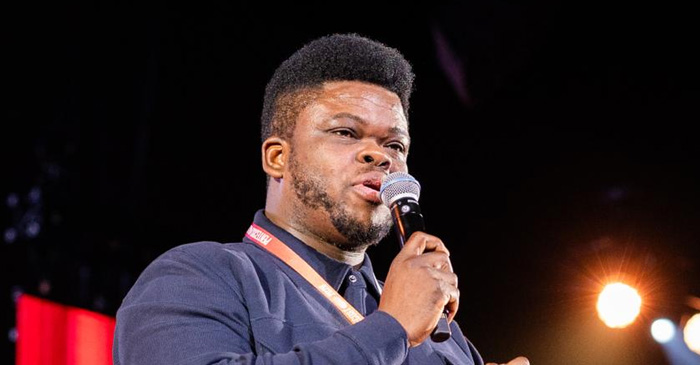
The Church must rethink how it engages people from different cultures by embracing an intercultural rather than merely a cross-cultural approach to ministry, Evangelist Sika Kwame has said.
Speaking during a panel discussion at the Pentecost Conference 2026 in Oberhausen, Germany, the experienced missionary explained that while cross-cultural ministry has long been emphasised in missions, today’s increasingly interconnected world calls for a deeper model of mutual engagement and learning.
Reflecting on his years of ministry across parts of Asia, Africa and Europe, including recent engagements in the Balkans and Cambodia, Evangelist Kwame said his experiences have reshaped his understanding of how Christians should relate to people from different cultural backgrounds.
“I believe we should begin thinking about shifting from cross-culturalism to interculturalism,” he said.
According to him, cross-cultural ministry often suggests that one person crosses into another person’s cultural space to build relationships. Intercultural ministry, however, creates a space where people from different cultures meet as equals, interact openly, learn from one another and grow together.
“When we become intercultural, we come together just as we are. We interact, we think together, we speak together, and that encounter enriches all of us,” he explained.
He likened the concept to the Church’s emphasis on intergenerational ministry, where different age groups intentionally engage one another instead of existing in separate spaces.
Evangelist Kwame stressed that adopting an intercultural mindset reinforces the universal nature of the gospel, reminding believers that no single culture should be equated with Christianity itself.
“The gospel is universal. My culture is not the gospel,” he noted.
Drawing from practical ministry experiences, he observed that many behaviours often mistaken for personal shortcomings are, in reality, expressions of cultural differences.
He cited the example of someone avoiding direct eye contact during a conversation. While some cultures may interpret this as a lack of confidence or openness, others regard it as a sign of humility and respect.
“What I used to think was a character problem is, after all, a cultural difference,” he remarked.
He encouraged Christians to become intentional about listening to, interacting with and learning from people of different nations, ethnicities and backgrounds, saying such engagement strengthens relationships and enhances the Church’s witness in an increasingly multicultural world.
His presentation formed part of a panel discussion examining contemporary issues affecting the Church and society during the Pentecost Conference 2026.
PENT NEWS.
About The Author

 Joseph Otsibah