

 Joseph Otsibah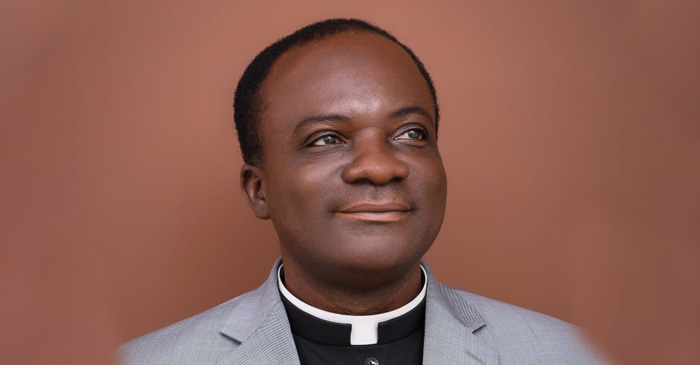
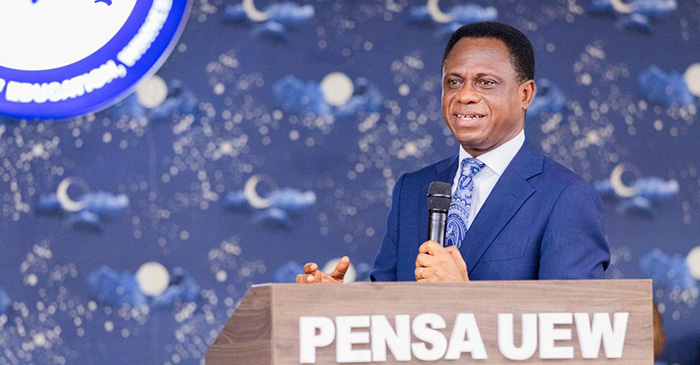
By Apostle Samuel Berko (Amrahia Area Head)
Moving Beyond Personal Salvation to Kingdom Impact
For too long, the Church has preached a truncated gospel—one that stops at the doorstep of heaven while leaving the marketplace, the classroom, and the corridors of power untouched by God’s transforming power. We have reduced the glorious message of Jesus Christ to a personal fire insurance policy, forgetting that our Saviour came proclaiming not merely individual salvation, but the breaking in of God’s Kingdom into every sphere of human existence.
The time has come for the Church, particularly we Pentecostal believers who are so passionate about the move of the Holy Spirit, to embrace the fullness of the gospel message—the holistic gospel that transforms not only souls but societies.
Two Gospels or One Complete Message?
The Gospel of Salvation
The gospel of salvation focuses primarily on personal redemption from sin and the assurance of eternal life. This message centres on the individual’s need for forgiveness, the atoning work of Christ on the cross, and the promise of heaven for those who believe. It answers the crucial question: “What must I do to be saved?” (Acts 16:30).
This gospel emphasises:
Personal conversion and the new birth (John 3:37)
Forgiveness of sins through Christ’s blood (Ephesians 1:7)
Justification by faith (Romans 5:1)
Eternal life and escape from hell (John 3:16)
Individual relationship with God (Romans 8:1516)
The gospel of salvation is essential and biblical. Without personal salvation, there is no entry into God’s Kingdom. As Jesus told Nicodemus, “Unless one is born again, he cannot see the kingdom of God” (John 3:3, NKJV). This message has rightly been the foundation of evangelistic preaching throughout Church history.
The Gospel of the Kingdom
The gospel of the Kingdom, however, is broader. It encompasses personal salvation but extends far beyond it to address God’s reign over all creation and every dimension of human life. This was the primary message Jesus preached: “Jesus went throughout Galilee, teaching in their synagogues, proclaiming the good news of the kingdom, and healing every disease and sickness among the people” (Matthew 4:23, NIV).
The gospel of the Kingdom emphasises:
- God’s sovereign rule over all creation (Psalm 103:19)
- The present reality of God’s Kingdom, not just its future consummation (Luke 17:21)
- Transformation of culture and society (Matthew 13:33)
- Justice, righteousness, and shalom in all relationships (Isaiah 32:1617)
- Believers as ambassadors and representatives of the King (2 Corinthians 5:20)
- The integration of faith into every area of life—work, family, politics, economics, arts, and education (Colossians 3:17)
As theologian George Eldon Ladd wrote in his seminal work The Gospel of the Kingdom, “The Kingdom of God involves two great moments: fulfilment within history, and consummation at the end of history” (1959, p. 37). The Kingdom has already broken into human history through Christ’s first coming, yet awaits its complete fulfilment at His return.
Why the Gospel of the Kingdom Must Be Recovered
The Biblical Priority
When we examine Scripture carefully, we discover that Jesus spoke about the Kingdom of God more than any other topic. The phrase “kingdom of God” or “kingdom of heaven” appears over 100 times in the Gospels. Jesus began His public ministry declaring, “The time is fulfilled, and the kingdom of God is at hand. Repent, and believe in the gospel” (Mark 1:15, NKJV).
After His resurrection, Jesus spent forty days “speaking of the things about the kingdom of God” (Acts 1:3, NKJV). The apostles continued this emphasis, with Paul “preaching the kingdom of God and teaching the things which concern the Lord Jesus Christ” (Acts 28:31, NKJV).
The Danger of a Privatised Gospel
When we preach only the gospel of salvation without the gospel of the Kingdom, we risk creating what Dietrich Bonhoeffer called “cheap grace”—a faith that demands nothing and transforms nothing beyond personal comfort. We produce believers who are “saved” but who live Monday through Saturday as practical atheists, compartmentalising their faith as a private matter irrelevant to their work, civic engagement, or cultural influence.
This truncated gospel has led to a Church that is:
- Powerless to address systemic injustice
- Absent from conversations about public policy and cultural formation
- Ineffective in demonstrating the Kingdom’s transforming power
- Disconnected from the everyday struggles of people in the marketplace
As Dallas Willard observed in The Divine Conspiracy, “The greatest issue facing the world today, with all its heartbreaking needs, is whether those who, by profession or culture, are identified as ‘Christians’ will become disciples—students, apprentices, practitioners—of Jesus Christ, steadily learning from him how to live the life of the Kingdom of the Heavens into every corner of human existence” (1998, p. xv).
The Transformation Mandate
The gospel of the Kingdom empowers believers to be agents of transformation in every sphere of society. When we understand that God’s reign extends over economics, politics, arts, science, education, and family—not just church services—we begin to live as ambassadors of a different Kingdom, bringing Kingdom values and Kingdom power into every arena of life.
Consider Daniel in Babylon, Joseph in Egypt, or Esther in Persia. These believers didn’t just maintain private devotion; they transformed entire nations by living out Kingdom principles in the public sphere. They understood that their God was King over all kings and that they were His representatives in foreign lands.
Practical Steps for Churches to Embrace Kingdom Living
1. Preach and Teach the Full Gospel
Pastors must reclaim the biblical emphasis on the Kingdom of God. This doesn’t mean abandoning salvation preaching, but expanding it. Every sermon on personal redemption should connect to the larger story of God’s Kingdom breaking into this world.
Develop a sermon series specifically on the Kingdom of God, using Jesus’ parables in Matthew 13 and 25 as a foundation. Help believers understand that salvation is the entrance into Kingdom life, not the totality of the gospel message.
2. Disciple Believers for Monday, Not Just Sunday
Discipleship must extend beyond Bible knowledge to include training believers how to live as Kingdom citizens in their workplaces, schools, and communities. We must teach Christian plumbers, teachers, nurses, entrepreneurs, and politicians how their vocations are Kingdom callings.
Create vocational discipleship groups where believers in similar professions meet to pray, discuss Kingdom principles in their fields, and strategise about bringing transformation to their spheres of influence. Regularly interview marketplace believers during services to celebrate how God is using them beyond the church walls.
As Os Guinness writes in The Call, “Our primary calling as followers of Christ is by him, to him, and for him. First and foremost we are called to Someone (God), not to something (such as motherhood, politics, or teaching) or to somewhere (such as the inner city or Outer Mongolia)” (2003, p. 31).
3. Engage Scripture with Kingdom Eyes
Teach believers to read the Bible looking for Kingdom principles that apply to all of life. When reading the Sermon on the Mount, for example, don’t just spiritualise it—help people see how Jesus’ teachings on justice, integrity, generosity, and reconciliation apply to business practices, community relationships, and civic engagement.
Conduct topical Bible studies on Kingdom themes: Kingdom economics (generosity, stewardship, justice for the poor), Kingdom family life (marriage, parenting, hospitality), Kingdom citizenship (justice, mercy, civic responsibility), and Kingdom creativity (using gifts for God’s glory).
4. Mobilise for Community Transformation
Move beyond church programmes that only serve church members. Partner with other churches and community organisations to address real needs: poverty, education gaps, injustice, environmental stewardship, and broken families. Demonstrate the Kingdom’s power to bring shalom—God’s peace, wholeness, and flourishing—to broken places.
Identify the top three needs in your community through prayer and research. Form action teams of believers committed to addressing these needs as a Kingdom witness. This might include starting tutoring programmes, addiction recovery ministries, business development initiatives, or justice advocacy groups.
5. Cultivate a Kingdom Culture in the Church
The church itself should model Kingdom culture: radical generosity, reconciliation across racial and economic lines, servant leadership, and the honouring of every member’s calling. When the watching world sees Kingdom culture lived out authentically in the church, they gain a preview of God’s coming Kingdom.
Regularly commission believers for their marketplace ministries just as you would commission missionaries. Pray over teachers before the school year, businesspeople before major projects, and politicians entering office. Create a “Kingdom fund” where a portion of church resources specifically supports believers launching Kingdom initiatives in their spheres.
6. Recover the Prophetic Voice
The Church must speak truth to power and advocate for the voiceless, just as the Old Testament prophets did. This doesn’t mean becoming partisan, but it does mean addressing injustice, corruption, and oppression wherever they exist—in the marketplace, government, or even within the church itself.
Create space for believers to share how they’re confronting injustice in their spheres. Teach on biblical justice using prophets like Amos, Micah, and Isaiah. Encourage believers to see themselves as modernday prophets bringing God’s perspective to their industries and communities.
7. Emphasise the Holy Spirit’s Empowerment for All of Life
As Pentecostal believers, we understand the baptism and infilling of the Holy Spirit. But we must expand our theology to recognise that the Spirit empowers us not just for worship services and evangelistic crusades, but for Kingdom excellence and Kingdom transformation in every arena. The same Spirit who gives utterance in tongues gives creativity to artists, wisdom to leaders, and compassion to caregivers.
Teach that spiritual gifts function in the marketplace, not just in church meetings. Pray for believers to receive divine strategies in their work, supernatural wisdom for complex problems, and prophetic insight for their industries. Celebrate testimonies of how the Holy Spirit guided business decisions, brought breakthroughs in research, or provided creative solutions to community problems.
As Pentecostal theologian Amos Yong notes in The Spirit Poured Out on All Flesh, the Holy Spirit’s work extends “beyond the church and into the world, wherever truth, goodness, and beauty are manifest” (2005, p. 315).
The Biblical Foundation for Kingdom Living
Scripture is replete with Kingdom vision. Consider these foundational passages:
The Lord’s Prayer (Matthew 6:910): Jesus taught us to pray, “Your kingdom come, your will be done on earth as it is in heaven.” This prayer isn’t about escaping earth for heaven, but about heaven invading earth. We’re called to partner with God in making earth look more like heaven.
The Great Commission (Matthew 28:1820): Jesus’ command to “make disciples of all nations” includes teaching them to obey everything He commanded—including His Kingdom teachings about justice, mercy, humility, generosity, and love. Discipleship isn’t just about getting people saved; it’s about training them to live as Kingdom citizens.
The Cultural Mandate (Genesis 1:28): Before the Fall, God commissioned humanity to ‘fill the earth and subdue it”—to exercise stewardship over creation and develop culture for God’s glory. Redemption restores us to this calling. As Abraham Kuyper famously declared, “There is not a square inch in the whole domain of our human existence over which Christ, who is Sovereign over all, does not cry, ‘Mine!’
Isaiah’s Vision (Isaiah 61:14): Jesus inaugurated His ministry by reading this passage, declaring that He came “to proclaim good news to the poor… to proclaim freedom for the prisoners and recovery of sight for the blind, to set the oppressed free.” The Kingdom gospel addresses spiritual needs but also social, economic, and physical needs. It brings comprehensive restoration.
Paul’s Cosmic Vision (Colossians 1:1520): Paul declares that through Christ “all things” are being reconciled—not just individual souls, but all creation. The gospel’s scope is as wide as creation itself. Nothing falls outside Christ’s redemptive purpose.
Conclusion: A Call to Kingdom Living
Beloved brothers and sisters, the hour is urgent. Our world is crying out for hope, for justice, for transformation. People are tired of a Christianity that is all talk and no power, all heaven and no earth, all personal piety and no public impact.
We have the answer—not just a message of personal salvation, though that is gloriously true, but the gospel of the Kingdom of God. A gospel that saves souls and transforms cities. A gospel that changes hearts and renews cultures. A gospel that promises eternal life and demands Kingdom living now.
The same Holy Spirit who fell at Pentecost, empowering the early church to turn the world upside down (Acts 17:6), is available to us today. But we must have the same vision they had—not just of people being saved, but of the Kingdom of God advancing in power, transforming every corner of society.
Let us return to the complete gospel that Jesus preached—the gospel of the Kingdom. Let us raise a generation of believers who don’t just attend church but who are the Church, bringing Kingdom light into the darkness, Kingdom truth into deception, Kingdom justice into oppression, and Kingdom love into hatred.
Let us demonstrate to a watching world that when Jesus taught us to pray “Your kingdom come,” He meant it not as a distant hope, but as a present reality we can experience and advance every single day.
The Kingdom is here. The King is reigning. And we are His ambassadors, empowered by His Spirit to see His will done on earth as it is in heaven.
To God be the glory, in the Church and in all creation, now and for ever. Amen.
All Scripture quotations are from the New King James Version (NKJV) or New International Version (NIV) as noted.
References
Bonhoeffer, D. (1959). The Cost of Discipleship. New York: Touchstone.
Guinness, O. (2003). The Call: Finding and Fulfilling God’s Purpose for Your Life. Nashville: Thomas Nelson.
Kuyper, A. (1880). Sphere Sovereignty. Inaugural address at the Free University of Amsterdam.
Ladd, G. E. (1959). The Gospel of the Kingdom: Scriptural Studies in the Kingdom of God. Grand Rapids: Eerdmans.
Willard, D. (1998). The Divine Conspiracy: Rediscovering Our Hidden Life in God. San Francisco: HarperOne.
Yong, A. (2005). The Spirit Poured Out on All Flesh: Pentecostalism and the Possibility of Global Theology. Grand Rapids: Baker Academic.
All Scripture quotations are from the New King James Version (NKJV) or New International Version (NIV) as noted.
About The Author


 Joseph Attoh