
Acts 9:1–22; Philippians 3:4–9; 1 Timothy 1:12–16; 2 Corinthians 4:6; Galatians 1:15–16
“As he neared Damascus on his journey, suddenly a light from heaven flashed around him.”
Acts 9:3
Introduction
Some people can see clearly with their physical eyes and still be spiritually blind.
They can recognise opportunities but fail to recognise God.
They can understand religious regulations but miss divine revelation.
They can quote Scripture but fail to encounter the Christ revealed in Scripture.
They can be sincere, passionate and committed—and still be travelling in the wrong direction.
Saul of Tarsus was not an atheist. He was not indifferent to God. He was deeply religious, highly educated and passionately committed to what he believed.
He knew the law, honoured Jewish traditions, defended the faith of his ancestors, possessed impressive religious credentials, and was sincere in his convictions. Yet Saul was sincerely wrong. He believed he was defending God while fighting against the work of God. He thought he was protecting truth while persecuting the One who is the Truth. He carried religious authority in his hands, but spiritual blindness in his heart. Saul could see the road to Damascus, but he could not see where that road was taking him.
Then Jesus interrupted his journey. A light from heaven shone around him. Saul fell to the ground, heard the voice of Christ and rose physically blind. Yet that physical blindness became the beginning of spiritual sight. The man who lost his natural sight on the Damascus road began to see what he had never seen before. He saw Jesus differently, saw himself differently, saw the Church differently, saw Scripture differently, and saw his purpose differently. Sometimes God must interrupt what we are seeing before He can show us what we have been missing. Saul was blinded so that he could finally see.
1. It Is Possible to Be Religious and Still Be Spiritually Blind
Acts 9:1 says: “Meanwhile, Saul was still breathing out murderous threats against the Lord’s disciples.” (NIV)
Saul was not living without conviction. He was acting from conviction. He sincerely believed that the followers of Jesus were dangerous and that destroying them was service to God.
In Philippians 3, Saul later described his religious credentials. He was circumcised according to Jewish law, belonged to the people of Israel, came from the tribe of Benjamin and was a Pharisee. Regarding zeal, he persecuted the Church; regarding legalistic righteousness, he considered himself faultless.
If religious credentials could save a person, Saul had enough. But religion had informed his mind without transforming his heart. Religion without revelation can make a person proud of knowledge but empty of love. It can make someone passionate about rules while remaining insensitive to people. It can make a person defend God while behaving in a manner that does not reflect God. Saul knew the written law, but he did not recognise the living Word. He knew what Moses had written, but he did not recognise the Messiah about whom Moses wrote. He was trying to protect the honour of God while dishonouring the Son of God.
This is the danger of religious activity without a genuine encounter with Christ. A person can attend church without surrendering to Christ. One can sing, preach, pray, serve and hold a position while remaining unchanged within. Religion can modify outward behaviour, but only Christ can transform the heart. The core of the matter is not, “Do I practise religion?” but “Have I encountered Jesus Christ?”
2. Saul Had Zeal, but His Zeal Was Travelling in the Wrong Direction
Saul was not lazy, passive or half-hearted. He was passionately wrong.
He obtained letters from the high priest authorising him to arrest believers in Damascus. He invested time, energy, influence and strength in a mission that opposed the purpose of God.
Zeal is powerful, but zeal must be guided by truth.
You can run quickly in the wrong direction.
You can work hard on the wrong assignment.
You can be committed to something God never commanded.
You can be admired by people while resisting the purpose of heaven.
Romans 10:2 speaks about people who were zealous for God, but whose zeal was not based on knowledge. Passion alone is not enough. Fire is useful when it is placed in the right location, but when it leaves the fireplace, it can burn down the house. Saul’s passion was not the problem. The problem was that his passion had not been surrendered to Christ. After his conversion, God did not remove Saul’s passion. God redirected it. The same man who travelled from city to city to arrest believers later travelled from city to city to preach the gospel. The same mouth that breathed threats later preached grace. The same hands that carried letters of persecution later wrote letters that strengthened the Church. The same courage that had been used against Christ was surrendered to the service of Christ. God does not always destroy your passion.
Sometimes He converts it. Your energy must be surrendered. Your ambition must be surrendered. Your intelligence must be surrendered. Your influence must be surrendered. Your talents must be surrendered.
When zeal meets revelation, passion receives divine direction.
3. Jesus Interrupted Saul’s Journey
Acts 9:3 says:
“As he neared Damascus on his journey, suddenly a light from heaven flashed around him.”
Saul was approaching Damascus, but Jesus was approaching Saul. He had a plan, official permission and companions. Everything appeared to be under his control, but one encounter with Jesus brought his entire journey to a halt.
The light came suddenly.
Saul did not schedule the encounter, invite Jesus into the journey or search for Christ, but Christ came looking for him. This is grace! Grace is God stepping into a life that is travelling away from Him. It is Jesus confronting us before our choices completely destroy us. It is God interrupting our wrong direction and offering us a new destination.
Saul was going to Damascus to arrest Christians, but God was going to Damascus to arrest Saul’s heart. Saul carried letters from the high priest, but Jesus spoke with authority from heaven. Earth had authorised Saul, but heaven overruled him.
Some interruptions are not attacks; they are acts of mercy.
The closed door may be mercy; the uncomfortable conviction may be mercy; the exposure of your weakness may be mercy; the failure of your plan may be mercy, and the voice calling you to repentance may be mercy. We often ask God to bless our journey, but sometimes God loves us too much to bless the direction in which we are travelling. Some journeys need divine interruption.
4. The Light Exposed the Darkness Saul Could Not See
Saul was surrounded by light, yet he rose from the ground unable to see.
This was more than physical blindness. It was a visible picture of his spiritual condition. Before the encounter, Saul thought everybody else was blind. He thought the followers of Jesus were deceived and believed he understood God better than they did. Then the light of Christ exposed the darkness within him. True revelation does not merely show us who God is; it also shows us who we are.
When Isaiah saw the Lord, he cried:
“Woe to me! … I am a man of unclean lips.”
Isaiah 6:5
When Peter witnessed the miraculous catch of fish, he said:
“Go away from me, Lord; I am a sinful man!”
Luke 5:8
When Saul encountered Jesus, the strong man fell to the ground.
You cannot truly see Christ and remain impressed with your own righteousness.
Revelation produces humility. Before Damascus, Saul walked with confidence because he believed he understood everything. After encountering Jesus, he had to be led by the hand. The man who came to control others could no longer direct his own steps. Sometimes God allows our confidence to collapse so that our dependence on Him can begin.
5. Saul Discovered That Attacking the Church Was Attacking Christ
Acts 9:4 records the voice of Jesus:
“Saul, Saul, why do you persecute me?”
Jesus did not say, “Why are you persecuting My followers?”
He said, “Why do you persecute Me?”
Saul had arrested believers, but Jesus took it personally.
This reveals the depth of Christ’s relationship with His Church. When the Church suffers, Christ is not emotionally distant. He identifies with His people.
When you wound Christ’s people, you touch what belongs to Christ.
When you encourage them, you honour Christ. When you serve them, you serve Christ. When you oppress them, you oppose Christ. When you persecute them, you persecute Christ. Saul thought he was fighting ordinary men and women. He did not realise that heaven stood behind the people he was attacking. Be careful how you treat people who belong to God. They may appear weak, but Christ identifies with them. They may not be able to defend themselves, but heaven knows their names. Jesus knew exactly where Saul was, what he was doing and whom he was hurting. The persecuted believers were not forgotten.
6. Revelation Begins with the Right Questions
Saul asked, “Who are you, Lord?” (Acts 9:5)
This was the question that changed everything. Saul knew religion, but he did not know Jesus.
He knew traditions.
He knew arguments.
He knew regulations.
He knew how to defend his beliefs.
But when the light appeared, he had to ask:
“Who are You, Lord?”
Jesus answered, “I am Jesus, whom you are persecuting.”
Saul’s transformation began with a revelation of Jesus Christ. Christianity is not merely accepting a moral system. It is coming into a living relationship with Jesus. The centre of the gospel is not a denomination, tradition, personality or institution. The centre of the gospel is Jesus Christ, who was crucified, risen and reigning as Lord.
The second question that emerges from Saul’s surrender is expressed in Acts 22:10: “What shall I do, Lord?”
These are the two great questions of genuine conversion:
“Who are You, Lord?”
“What shall I do, Lord?”
The first concerns revelation, and the second concerns submission.
It is not enough to recognise who Jesus is. We must surrender to what He commands. Many people want Jesus to save them, but they do not want Him to direct them. They want His blessings without His lordship, His promises without His instructions and His comfort without His correction. But when Saul called Jesus “Lord,” the direction of his life changed. A genuine encounter with Christ does not merely produce emotion. It produces surrender.
7. Saul Had to Lose Control Before He Could Discover God’s Purpose
Acts 9:8 says:
“Saul got up from the ground, but when he opened his eyes he could see nothing. So they led him by the hand into Damascus.”
What a dramatic reversal! Saul entered the journey as the leader, but arrived in Damascus being led. He began the journey with letters of authority, but entered the city without personal direction. He planned to enter Damascus with prisoners. Instead, he entered Damascus as a broken man. God sometimes allows us to reach the end of our own strength because self-confidence can make us difficult to lead. Before God could use Saul powerfully, Saul had to learn dependence. For three days, he was blind and neither ate nor drank. The noise stopped. The threats stopped. The movement stopped. Saul was left alone with the revelation he had received. There are moments when God brings us into stillness so that our hearts can finally listen.
Silence is not always rejection.
Waiting is not always punishment.
Brokenness is not always destruction.
Sometimes God empties our hands because we are holding the wrong assignment. Sometimes He permits darkness around us because He is producing light within us. Saul’s blindness was temporary, but the revelation it produced lasted for the rest of his life.
8. God Used Ananias to Help Saul See
In Damascus, God spoke to a disciple named Ananias:
“Go! This man is my chosen instrument to proclaim my name to the Gentiles and their kings and to the people of Israel.” Acts 9:15
Ananias knew Saul’s reputation. He had heard about the suffering Saul caused. Naturally, he was afraid. But God had seen something in Saul that nobody else could see.
People saw a persecutor, but God saw an apostle. People saw a destroyer, but God saw a builder. People saw danger, but God saw a chosen instrument.
This does not excuse Saul’s actions. Grace does not pretend that the past never happened. Grace demonstrates that the past does not have to control the future.
Ananias obeyed God, entered the house and placed his hands on Saul. Then he said, “Brother Saul…” What extraordinary words! The man who had come to arrest believers was addressed as a brother by one of the believers he had intended to persecute. Ananias did not call him “enemy Saul” or “murderer Saul.” He called him “Brother Saul.” Grace had created a new relationship. The Church Saul intended to wound became the community through which God welcomed and restored him. Sometimes the person God is transforming still carries a frightening reputation. We must learn to recognise what grace is doing, not only what the past has done.
9. When the Scales Fell, Saul Saw Everything Differently
Acts 9:18 says, “Immediately, something like scales fell from Saul’s eyes, and he could see again.”
The scales fell from his physical eyes, but something deeper had also happened within his heart.
He could now see Jesus as Lord.
He could see believers as family.
He could see the gospel as truth.
He could see his righteousness as insufficient.
He could see his life as belonging to Christ.
He could see his suffering as part of a divine calling.
Before Damascus, Saul saw Jesus as an impostor. After Damascus, he proclaimed Jesus as the Son of God. Before Damascus, he considered believers enemies. After Damascus, he called them brothers and sisters. Before Damascus, his credentials were his confidence. Later, he considered them loss compared with knowing Christ.
Philippians 3:8 says:
“I consider everything a loss because of the surpassing worth of knowing Christ Jesus my Lord.”
Revelation changes how you interpret everything. When Christ opens your eyes, what once appeared valuable may lose its attraction. What once appeared foolish may become precious. What once seemed like weakness may become the power of God. The greatest miracle on the Damascus road was not merely that Saul regained physical sight. It was that he received an entirely new vision for his life.
10. Genuine Conversion Produces Visible Change
Acts 9:20 says, “At once he began to preach in the synagogues that Jesus is the Son of God.”
The people were astonished. They asked whether this was the same man who had caused devastation among believers in Jerusalem. It was the same person, but he was no longer living under the same authority.
His body was the same, his history was the same, and his intelligence was the same.
His personality was the same, but his Lord had changed, his direction had changed, and his message had changed. Conversion is more than repeating words. It is the surrender of a life to Jesus Christ. Saul did not merely add Jesus to his former life. Jesus became the centre of his life.
His conversion changed:
- His convictions
- His relationships
- His direction
- His priorities
- His message
- His mission
- His use of influence
- His understanding of suffering
- His understanding of success
The clearest evidence of conversion is transformation.
If Christ has truly entered our lives, something should begin to change. Our attitude should change. Our conduct should change. The way we treat people should change. The way we use our resources should change. Grace accepts us where we are, but grace does not intend to leave us unchanged.
11. Your Past Cannot Cancel God’s Purpose
Saul’s past was serious. Believers feared him for good reason. He had approved of Stephen’s death and attempted to destroy the Church. Yet Jesus met him.
Later, Saul wrote:
“Christ Jesus came into the world to save sinners of whom I am the worst.” (1 Timothy 1:15)
Paul never glorified his past. But he used his past as evidence of the greatness of God’s mercy. If Jesus could save Saul, nobody is beyond the reach of grace. Your history may explain where you have been, but it does not have to determine where you are going.
You may have opposed God.
You may have wasted opportunities.
You may have hurt people.
You may have made destructive decisions.
You may carry a reputation that frightens others.
But one genuine encounter with Jesus can redirect your entire life.
The blood of Jesus is stronger than your past, the mercy of Jesus is greater than your failure, and the purpose of Jesus can rise from the ruins of your wrong decisions. The man who attempted to silence the gospel eventually became one of its greatest messengers. Only grace can write a story like that.
12. Revelation Must Become a Life Assignment
Saul was not given sight merely so that he could see again. He was given sight so that he could serve.
God told Ananias:
“This man is my chosen instrument to proclaim my name.”
Saul’s revelation carried responsibility. Every encounter with God should produce obedience. Every revelation should lead us deeper into God’s purpose. God did not rescue Saul simply to make him comfortable. He rescued him to make him useful. Salvation is not only deliverance from something; it is a calling into something.
We are saved from sin and called into purpose.
We are delivered from darkness and sent to carry light.
We are rescued from destruction and commissioned to lead others towards life.
Paul would eventually preach across cities, plant churches, endure persecution, write letters and carry the name of Jesus before rulers and nations. The one who once caused believers to suffer later suffered for the gospel he had tried to destroy. When revelation is genuine, convenience is no longer the highest priority. Christ becomes worthy of everything.
Conclusion: Let the Scales Fall
Saul began the journey with open eyes but a blind heart. He ended it with temporarily blinded eyes but a heart awakened by revelation. He left Jerusalem believing he could see. He entered Damascus knowing he had been blind. That is what happens when we encounter Jesus. He shows us the blindness we were too proud to recognise. Perhaps your blindness is not physical. You may be blind to your spiritual condition, blind to the pain you have caused, blind to the purpose of God, or blind to the condition of your family. You may be blind to the danger of your direction, blind to the pride controlling your decisions, or blind to the Jesus standing in the path of your rebellion.
Today, the light of Christ is still shining.
Jesus still interrupts destructive journeys, confronts misguided zeal, opens blind eyes, transforms enemies into ambassadors, and gives new direction to surrendered lives.
Do not merely ask God to bless the road you have chosen, but ask Him whether you are travelling in the right direction. Let the scales fall.
Move from religion to revelation.
Move from knowledge about Christ to relationship with Christ.
Move from self-confidence to complete dependence.
Move from activity without purpose to obedience under His lordship.
Saul entered the light as a persecutor and came out as a witness. He went into Damascus with letters from men, but he came out with a commission from heaven. He entered intending to arrest believers, but he left captured by grace.
He was blinded, and for the first time, he could truly see.
Prayer
Lord Jesus, open my eyes.
Let me see You beyond religious activity.
Let me see myself in the light of Your truth.
Let me see the direction in which I am travelling.
Let me see the people I have misunderstood.
Let me see the purpose for which You created me.
Interrupt every journey that is taking me away from You.
Remove every scale from my eyes.
Turn my passion towards Your purpose, my strength towards Your service and my life towards Your glory.
Let me not merely practise religion. Let me encounter Christ.
Amen.
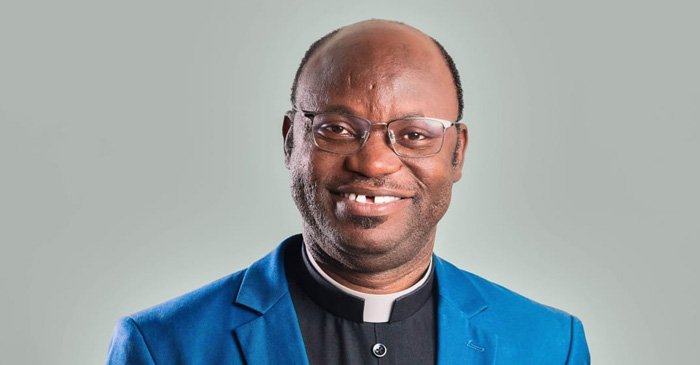
Written By Apostle Joseph Danzerl (Achimota Area Head)